Nature

Experience the unique natural enviroment

Biotopoi Nature Park

If you want to find out something more about Cretan flora and fauna, you can visit the Biotopoi Nature Park in Rethymno.

Here you can experience the colors, the shapes and the aromas of Cretan nature. The park is like a separate ecosystem located in a nice rocky landscape with a large number of wild plants protecting celebrating and enriching the surrounding area. Furthermore, there is also a large number of species of wild animals, reptiles, amphibians, birds, insects and fish. Tropical animals, such as: iguanas, snakes and turtles, have a private “habitat” with ponds, plants and fish that suit them, in order to offer them more natural conditions of life. Specialized guides make the tours in the park, giving lots of information about plants and animals that live there. The goal is to help children and adults get closer to nature, making them realize that humans, plants and animals can live all together in harmony, without damaging each other. Mother Nature has to tell many secrets and stories dealing with creation, originality, development, competition, survival and then balance.

Come and visit us! Enjoy the true experience of Cretan wild flora and fauna. Biotopoi Nature Park, a place where people and nature can live in harmony together!

www.biotopoi.blogspot.com

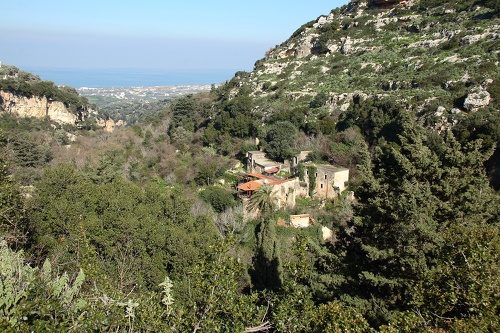
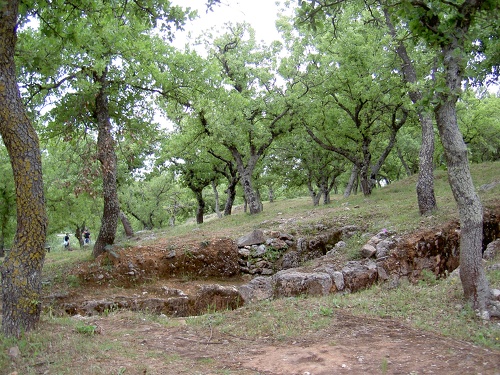
Crete is characterized by its beautiful mountains. It is one of the few places where you can admire the original Cretan forest of chestnut trees (Castanea sativa), plane trees (Platanus Orientalis), cypress trees (Cupressus sempervirens), oak trees (Quersus ilex) and pine trees(Pinus Brutia) and the gorges and cliffs covered by myrtle trees (Murtus Communis), rosemary (Rosmarinus Officinalis) and Erica (Erica).

The best time to enjoy the rich flora and fauna of Crete is during the spring season, when swarms of migratory birds pass by on their way to Europe. The local birds are mostly warblers, larks and goldfinch and lucky ones might also see eagles or other raptors, such as Falco Eleonora.
Among the local fauna, we can find an animal which only lives in Crete. It’s common name is “Kri-Kri” (Capra aegagrus creticus). It is related to the wild goat that lives in Caucasus, Iran, Pakistan and has been hunted for centuries for its meat and skin. Kri-kri has been declared a protected species since 1970 and lives in wild and inaccessible areas of Crete.


Harrier Eagle

  • It is a remarkable species of eagle, very fast and dynamic. It weights about 5-7 kilos and has a wing span of 2.80 meters.
  • Harrier Eagles usually build two or three nests but lay their eggs in only one of them in mid-winter (December or January).  Both parents incubate the eggs for about two months, when the eggs begin to hatch. By June, only one small brown bird flies away from the nest.
  • Shepherds in Crete call harrier eagles “bones”, because they mostly eat bones (70-90%).  They break the bones on rocks using a special technique: They drop the bones from a very high altitude onto steep rocky cliffs and then follow them. They repeat this procedure until the bones are broken.  
  • At the beginning of the century, the harrier eagle had become almost extinct from most European countries. Nowadays, they live in secluded in areas of the Pyrenees or Corsica while the species has been reintegrated in the Alps during the last 13 years. In Greece harrier eagles are found in most rocky areas. Crete hosts the largest number of harrier eagles in the world, with at least 10 million pairs.   
  • Main threats: destruction or downgrading of their biotopes, disturbance during the reproductive period, reduction of the wild ruminant population, recession of the mountain agriculture, hunting and use of poisoned baits.


The Hellenic Ornithological Society is active for their protection.


Caretta caretta

  • The Caretta can be one meter long and weights up to 90 kilos. Its shell is of red-brown color. It eats sea organisms such as medusas, seashells, mussels, etc. Like all reptiles, sea turtles breathe through lungs and can remain under the water more than humans can.
  • From May to August, female Carettas go out at night on the coasts of Crete and other regions of Greece to lay their eggs, burying them in the sand. They lay approximately 115 eggs, which hatch two months later. When they are born, they run to the sea but few of them will survive.  
  • Main threats: Destruction or downgrading of the hatching areas due to uncontrollable tourist development, fishery tools, sea pollution.


The main supporter in the protection of the sea turtle is the non-profit organization “ARCHELON”
Visitors in Rethymno can enjoy the beuatiful gorges in the area, such as the gorge of Prasses, the Arcadian gorge, the Vederan gorge, the Mulon gorge as well as other smaller gorges.


More specifically:

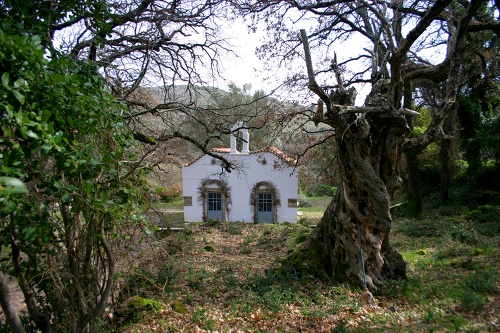
  • The gorge of Muloi located near Rethymno is an easy one hour walk through a green gorge. The gorge starts at “Chromonastery” and ends up at the village “Xiro Chorio”. There is a small river in the gorge and the deserted traditional “Muloi” village, where one can see samples of traditional architecture, old churches and caves. The Byzantine church of Saint Antonios is near “Muloi”.
  • The gorge of Prasses starts south from the village “Prasses”. It offers a three-hour walk through spectacular rocks. Some parts are difficult to access, making the walk even more interesting. It ends up at the village “Platania”, located in the northeast seaside of the city of Rethymno
  • The gorge of Patsou is easy to access and it is an excellent destination for small excursions and picnics since it combines swimming and walking. It takes three hours to cross the the green gorge and in some parts you have go through the water. The marked path is lost towards the end but if you continue walking, you will reach the village “Myrthios”.
  • The Arcadian gorge starts at the Arcadi Monastery and ends up at the village “Pikri” through a beautiful walk where the visitor can admire important remains of Venetian architecture.


The Mountain Club of Rethymno organizes excursions to the gorges during the summer.